Tuesday, 22 August 2017

Sheet Metal Fabrication – An Engineer’s Choice

Sheet metal fabrication is a growing sector, considering huge demand of sheet metals in various industrial and artistic works. Relatively low costs and varied applications of metal fabrication techniques as well as production capabilities and innovative design, make it an engineer’s choice. In fact, most construction and engineering challenges can be solved using sheet metals. Additionally, a wide range of materials, including steel, mild steel, aluminum and stainless steel can be fabricated into sheet metals to meet your changing needs. No wonder, why fabrication technique has gained immense popularity in the mechanical and construction industry of late.
Sheet metal fabrication

Sheet metal fabrication provides several benefits to engineers and contractors, namely:
  • Since fabricated sheet metal is typically thin and lightweight, it aids in fast & easy transportation and delivery
  • Sheet metals are engineered to be of high strength and resistant to sun, corrosion and moisture. Therefore, they are most ideal for a wide range of applications in today’s environment, especially outdoors
  • Metal fabrication makes sheet metals extremely strong and durable to withstand high pressure and yet remain malleable to be easily cut, bended and folded for a wide range of applications
  • Improved construction quality and durability makes sheet metals not as tedious as other construction materials. Therefore, they can be used for varied applications without any hindrance
  • Fabricated sheet metals are highly malleable. This means that despite being strong and tough, they can be formed into virtually any complex shape as required. Thus, there is almost limitless innovative design options for engineers and architects to develop structures and buildings
  • Typically, sheet metals are recyclable in nature. They are resistant to moisture, heat and corrosion, but at the same time, they are not harmful to the environment and can be easily recycled
  • Owing to vast application of fabricated metal sheet in industrial, construction and artistic expressions, manufacturers focus on sheet metal fabrication process, making the products easily available for different uses
  • A sheet metal includes numerous physical properties that make it easier for the engineers to inspect and detect damages quickly. Additionally, they are easily repairable as individual sheet metals can be dismantled from the structure and replaced without the need of taking down the entire structure
  • Finally, fabricated metal sheet is inexpensive and yet high quality, saving money

Talk to us at Lancerfab Tech about your sheet metal fabrication needs today. Call us on +91-98258-02030 today.

Monday, 29 May 2017

Sheet Metal Fabrication In the Aviation Parts Manufacturing Industry

Sheet metal fabrication is a standout amongst the most broadly utilized assembling forms utilized as a part of commercial enterprises today. Metal fabrication depicts various procedures whereby a bit of sheet metal is controlled into a completion item.

All commercial ventures utilize some type of metal fabrication process in the assembling of their items; vehicles, restorative, aviation, gadgets, sustenance administrations, information transfers, the rundown is verging on unending.
For some in the aviation division, move framing is a new—and consequently, underutilized— precision sheet metal fabrication process. Why? It’s most likely not a solitary offender.
Rather, aviation makers have likely released roll shaping in light of its precarious tooling costs, high-volume creation necessities and nonappearance from designing educational programs in advanced education.
In any case, roll shaping has much to offer aviation and flying. Actually, the persistent shaping strategy has numerous potential and acknowledged applications for:
  • Aircraft segments (LCA, Rotor, Unmanned).
  • Commercial and guard segments.
  • Engine segments.
  • Ground-level hardware (things, supplies development, and so on.).
  • Maintenance hardware.
  • Training and reproduction segments.
What do makers stand to pick up from the switch? Beneath, we layout four essential advantages for roll shaping aviation parts.
  1. Weight decrease.
In couple of businesses is weight lessening as basic as in aviation. Aviation gear makers face huge weight to create solid, lightweight parts that boost security and minimize costs.
Move framing can create long, complex straight shapes. Updating an item for move shaping will regularly wipe out parts, and therefore, clasp. Also, the procedure can frame an assortment of metals including aluminum and titanium compounds, which keep up auxiliary honesty at a lower gage. In mix, these properties can altogether diminish item intricacy, material substance and weight.
  1. Reliable product quality.
Roll framing guides snaked metal through a progression of tooling passes on. This slowly frames the metal into the wanted cross-area profile. The outcome is an amazing part with steady profile geometry.
Move shaping’s level of precision is vital in fields, for example, aviation, where the room for mistakes is little. Indeed, even a minor part imperfection could bring about a catastrophe that costs lives and a great many dollars.
  1. Length facilities.
Aviation has maybe the broadest range of metal segments, going from gigantic parts to little nuts, screws and boards. Move framing is perfect for long parts that can’t be created through stamping, press braking or expelling.
Fit for delivering parts of boundless length, a roll shaping line is obliged just by the length of the loop, and the method for transportation.
  1. In-line metal fabrication.
Move shaping’s allure crosswise over commercial ventures is its capacity to consistently frame loop bolstered material and perform optional operations, for example, punching and threading, in line. The efficiencies picked up by disposing of human work and multi-step manufacture forms result in shorter lead times and lower cost-per-part generation.
The procedure is especially alluring for high volume necessities, where economies of scale are accomplished. The rising interest in aviation is putting weight on assembling supply chains, which uplifts the requirement for a steady, proficient generation arrangement.
At the point when fabricating monstrous aeronautics structures, it frequently requires a hundred little upgrades to reveal one extensive cost reserve funds. On the off chance that streamlining sheet metal fabrication is a zone of interest, move framing may be justified regardless of a second look.

Thursday, 16 June 2016

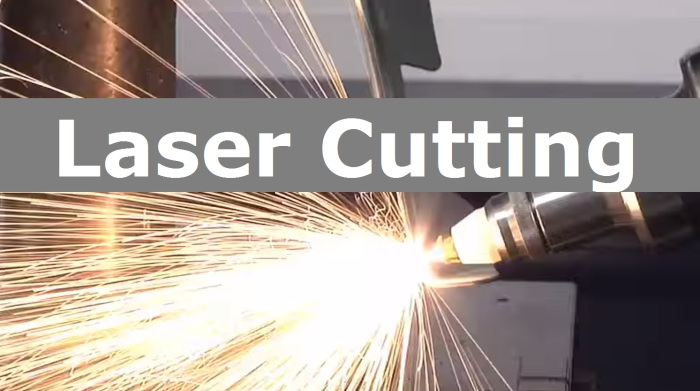
Here Are 5 Proven Reasons to Pick Laser Cutting


Beginning as right on time as 1967, laser cutting turned out to be an adaptable and productive method for creating sheet metal. At present, it's still a standout amongst the most financially savvy and exact techniques for sheet metal fabrication accessible.

Here are 5 noteworthy motivations to pick laser cutting for your undertaking!

1. Generally Low Cost

The expense of laser cutting, as most other assembling procedures, is controlled by work, operation, and machine costs (devices, bites the dust, upkeep, and so on.).
Since laser cutting is a CNC profoundly computerized process, work expenses are negligible contrasted with hand-worked hardware. Working expenses and machine costs fall amidst the street contrasted with other cutting strategies.

Outsourcing laser cutting is the best choice for most ventures. If you contract a producer who as of now has laser cutting capacities, this expense is incredibly relieved.

2. Speed and Efficiency

A laser can move as fast as 20-70 inches every moment. The careful rate will shift contingent upon resilience’s and many-sided nature of the parts.  Fabricating velocity will increment in the event that you have a multi-head laser or various lasers working without a moment's delay.

3. Computerization

Laser cutting is totally keep running by CNC controls. The recipes went into the PC implies every part and item is indistinguishably created – that implies less abandons per cluster.

4. High Precision

Laser cutting can make staggeringly little cuts at tight resilience’s (.005″ all things considered). That is the tradeoff: the more exactness you need, the slower the laser will move. Be that as it may, this exceptionally point by point ability is one of a kind to laser cutting. In this way, on the off chance that you require unpredictable cuts, laser cutting is the main sort of cutting that will carry out the employment well. All laser cut edges and bends are smooth, sharp, and clean. There is practically nothing, assuming any, burring in light of the fact that the laser liquefies as opposed to physically cuts the metal.

5. Enormously Versatile

Fetched, rate, robotization, and accuracy meet up to make laser cutting ideal for any size item or venture: models, modern requests, sensitive outlines, and bigger set patterns are all made basic and simple. Robotization takes into consideration creation inside a cutting run, no exchanging of bites the dust or development of sheet metal. Lasers are fit for making openings, spaces, tabs, and other cut manufactures with no intrusion of the cutting procedure.

Is Laser Cutting Right for You?


Laser cutting is best for extensive requests, tight resistances, and many-sided plans. In case you're not certain, there are a lot of laser cutting assets accessible, and we're cheerful to examine whether laser cutting is ideal for your task if you want to converse with a specialist specifically.

Friday, 8 April 2016

Laser Cutting Edge Quality: At a Glance


Edge quality in laser cutting has enhanced essentially throughout the decades, and a significant number of those upgrades originate from four zones: better materials, spouts, process control, and pillar quality.

Lasers have turned into the genuine workhorse of metal manufacture, and they have never been more beneficial. They cut homes at phenomenal rates, which has made material taking care of computerization significantly more imperative. All the high cutting velocity on the planet may not drastically influence general process duration if a laser sits unmoving for delayed periods, sitting tight for administrators to load sheets and empty parts.

Comparative thinking additionally applies to edge quality. Edge quality is, obviously, subjective. A mechanical engineer will take a look at a laser-cut part and find that the edge quality is bad. A welder, then again, may have a striking resemblance part and see a smooth, reliable, great edge. Notwithstanding, the application prerequisites manage what is viewed as a "quality" edge. A laser can complete a home of parts in a matter of moments, yet imagine a scenario where those parts should be sent through an optional deburring operation.


Cutting at such a large number of inches every moment is awesome, however general process duration may not change much if parts get discovered in a deburring bottleneck. To guarantee a superior cut edge, administrators verifiably needed to modify cut project parameters, for example, the cut rate around sharp corners, yet they now and then found this took longer than essentially sending the whole gone through a deburring framework.

A considerable measure has changed following the late 1990s and mid-2000s. Slicing lasers have advanced to the point where, as a rule, even thick parts rising up out of the cutting bed can skip optional deburring operations—no manual tweaking of cutting parameters required. These enhancements have come principally from progressions in four ranges: material quality, spout innovation, process control, and pillar quality.

New innovation is developing, in any case, that progressions the pillar properties of the fiber laser, permitting it to cut thick gentle steel with the same quality as CO2, yet with a large portion of the wattage. This will permit fabricators to buy a fiber laser to handle their full scope of material sorts and thicknesses, without uncommon optics.

Looking into the future, emerging technology no doubt will add another wrinkle to the laser cutting services market. Several manufacturers have developed solid-state systems known as direct-diode lasers, which offer additional efficiencies and unique processing advantages. While it is still unclear how this technology will affect the current laser options, it already has shown the ability to produce excellent edge quality.


Laser technology is forever changing. Faster, more efficient systems continue to emerge—and there is still more to come.